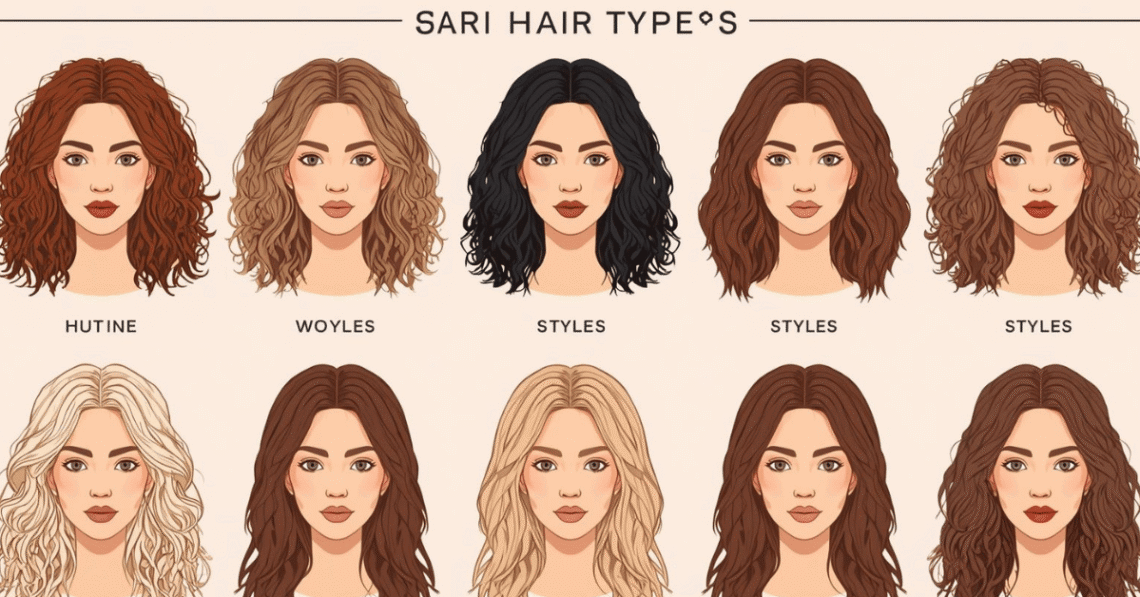
Ever tried a “holy grail” product that did absolutely nothing for your hair? You’re not alone. The secret to better hair care usually starts with understanding your hair type—and that’s where a hair type chart comes in.
A hair type chart helps categorize hair based on curl pattern and behavior, making it easier to choose the right products, cuts, and routines. In this guide, we’ll walk through the chart step by step, covering everything from the natural hair type chart to versions used for men, women, curly hair, and black hair.
What Is a Hair Type Chart?
A hair type chart is a classification system that groups hair into four main types based on curl pattern:
-
Straight
-
Wavy
-
Curly
-
Coily
Each type is further divided into subcategories (A, B, and C) to describe how loose or tight the pattern is. This system is widely used by hairstylists, dermatologists, and natural hair experts.
Natural Hair Type Chart Breakdown
The natural hair type chart focuses on hair in its untreated state—no heat, chemicals, or styling manipulation.
1: Straight Hair
-
1A: Very fine and flat
-
1B: Straight with slight volume
-
1C: Thick, straight hair with body
2: Wavy Hair
-
2A: Loose, beachy waves
-
2B: More defined waves
-
2C: Thick, frizz-prone waves
3: Curly Hair
This section is often highlighted in a curly hair type chart.
-
3A: Loose, shiny curls
-
3B: Springy ringlets
-
3C: Tight curls with lots of volume
4: Coily Hair
Most common in the black hairs type chart.
-
4A: Small, defined coils
-
4B: Z-shaped curl pattern
-
4C: Tight coils with minimal definition
Black Hair Type Chart: Understanding Coily Textures
The black hair type chart typically centers on Type 3 and Type 4 hair. These textures are more prone to dryness due to the curl pattern, which makes it harder for natural oils to travel down the hair shaft.
Common characteristics:
-
High shrinkage
-
Delicate strands
-
Need for frequent moisture
Understanding this chart helps with protective styling and long-term hair health.
Curly Hair Type Chart: Finding Your Curl Pattern
A curly hairs type chart helps people with Type 3 textures fine-tune their routine.
Why it matters:
-
Different curl types need different products
-
Styling methods vary by curl tightness
-
Prevents overuse of heavy or drying products
Knowing your curl type can drastically reduce frizz and breakage.
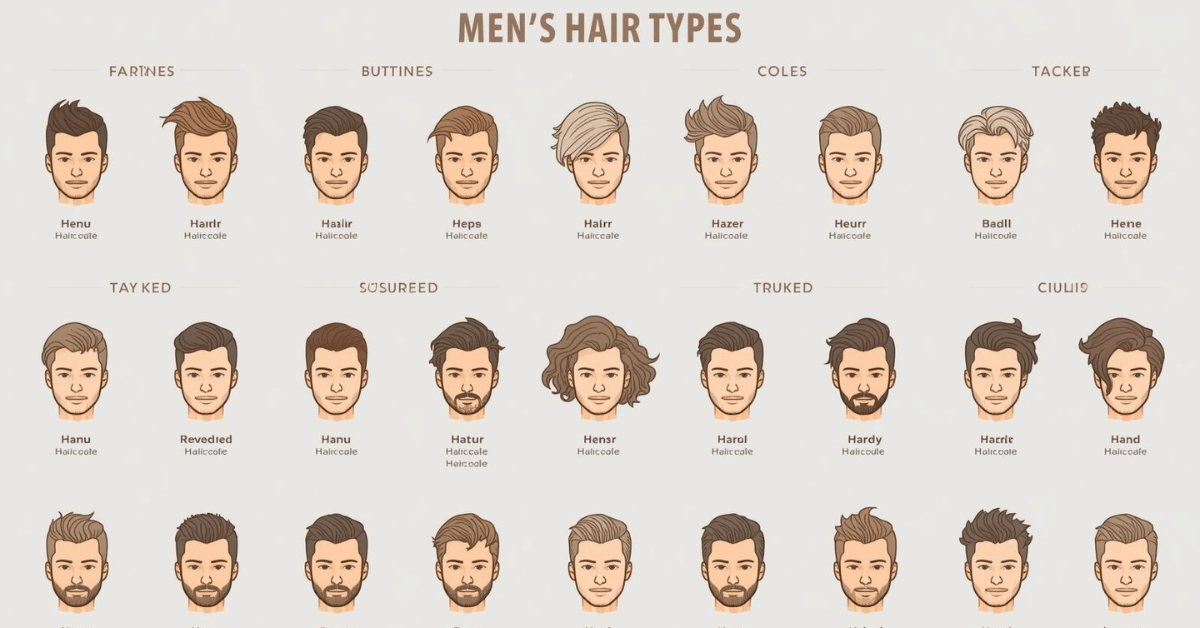
Hair Type Chart for Men
The hairs type chart men use follows the same structure, but styling goals often differ.
Benefits for men include:
-
Choosing better haircuts
-
Improving fade and taper blends
-
Selecting the right pomades, creams, or gels
Barbers often rely on hair type when recommending styles.
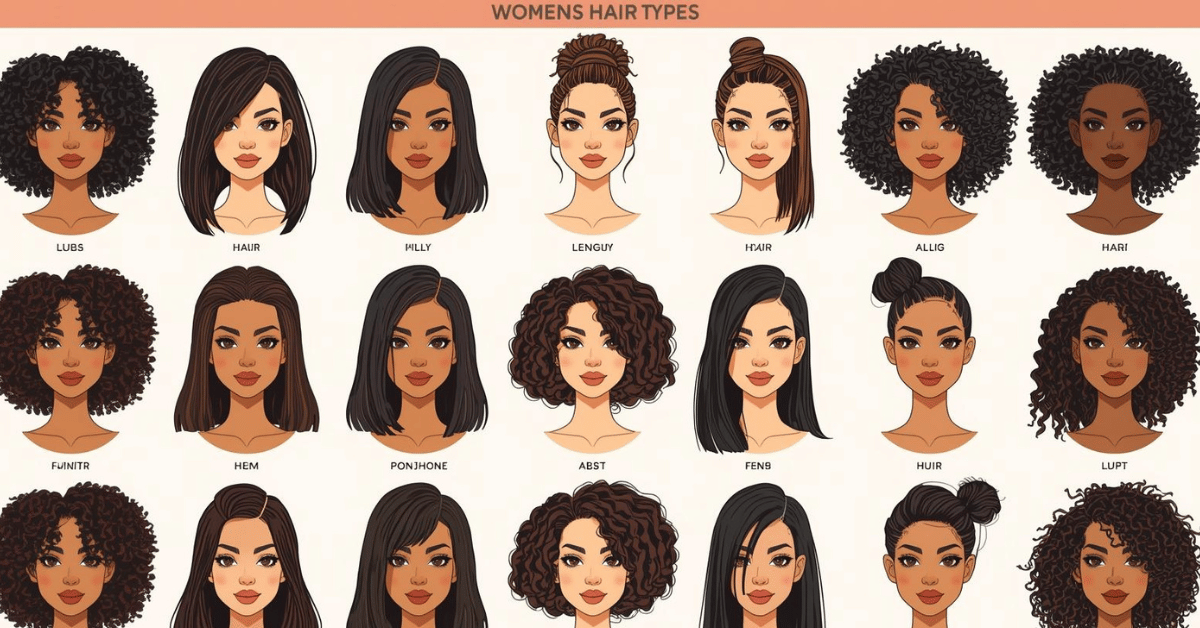
Hair Type Chart for Women
The hairs type chart women use helps guide everything from wash routines to long-term styling plans.
It’s especially useful for:
-
Transitioning to natural hair
-
Selecting protective styles
-
Managing heat and chemical damage
Understanding your type empowers better hair decisions.
How to Identify Your Hair Type at Home
Follow these steps for the most accurate results:
-
Wash your hair with a gentle shampoo
-
Skip styling products
-
Let hair air-dry completely
-
Observe your natural pattern
Your hair type should be assessed when hair is fully dry and untouched.
Read also <<< Hair Texture Chart
FAQs About Hair Type Charts
Can I have more than one hair type?
Yes. Many people have multiple hair types on different areas of their scalp.
Does hair type change over time?
It can. Hormonal changes, aging, and chemical treatments may alter your pattern.
Is hair type the same as hair porosity?
No. Hair type refers to curl pattern, while porosity describes how hair absorbs moisture.
Which hair type needs the most moisture?
Type 3 and Type 4 hair generally require the most hydration.
Are hair type charts scientifically proven?
They’re not medical tools, but they’re widely accepted in the hair care and cosmetology world.
Conclusion: Why the Hair Type Chart Matters
Understanding the hair type chart is one of the most important steps toward healthier hair. Whether you’re using a natural hair type chart, exploring curly textures, or learning more about black hair, knowing your type helps you choose better products, styles, and routines.