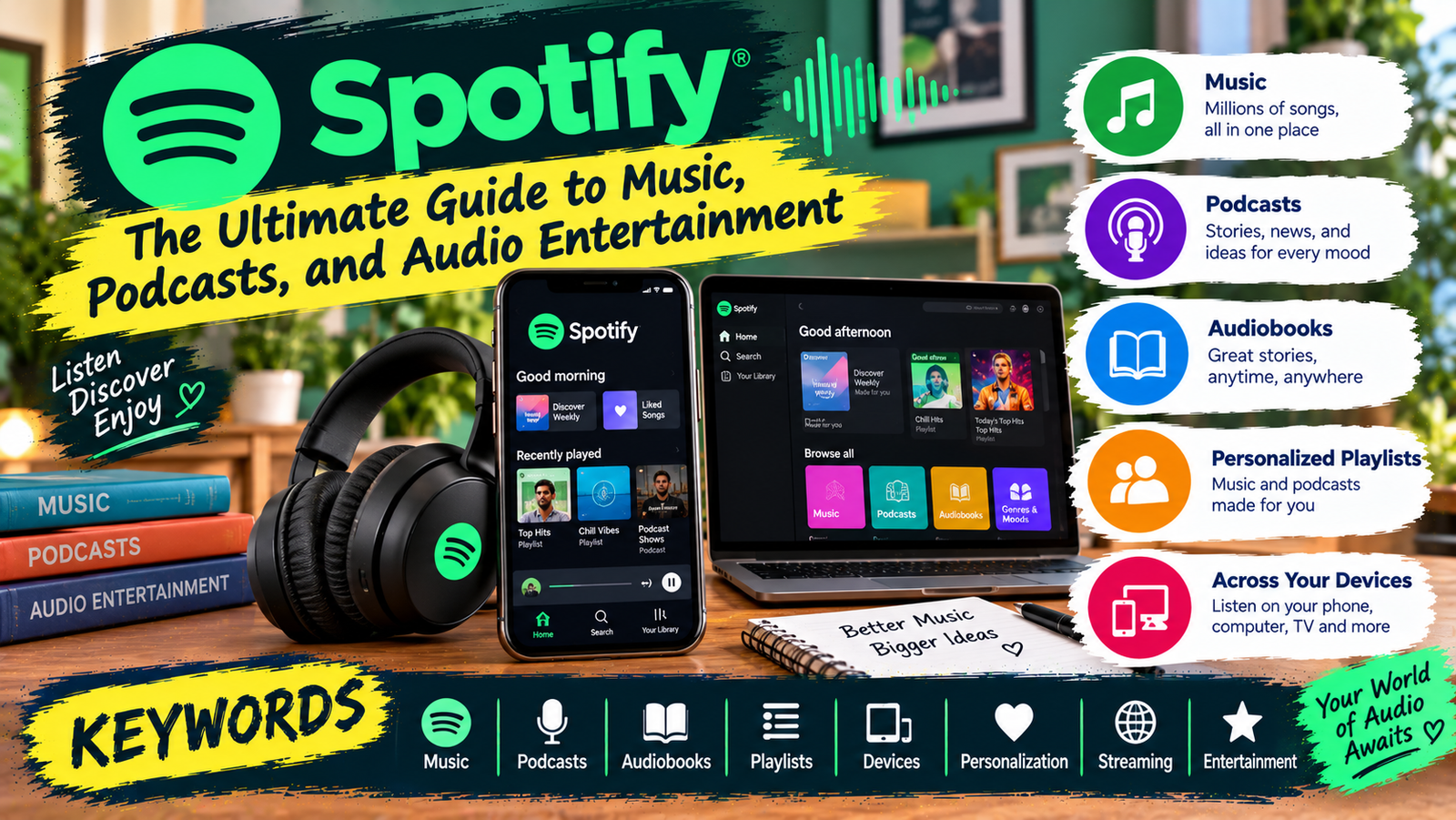
Spotify has become one of the most popular audio streaming platforms in the world. It gives users access to millions of songs, podcasts, albums, playlists, and other forms of audio entertainment from almost any device. Whether you enjoy discovering new artists, listening to your favorite songs, following podcasts, or creating personalized playlists, Spotify offers a convenient way to enjoy audio content online.
With both free and premium options, Spotify has attracted a huge global audience. Its personalized recommendations and easy-to-use interface have also changed the way people discover and listen to music.
What Is Spotify?
Spotify is a digital audio streaming service that allows users to listen to music and podcasts over the internet. The platform was launched in 2008 and has continued to expand its catalog and features.
Instead of requiring users to purchase individual songs or albums, Spotify provides access to a large collection of audio content through streaming. Users can search for specific songs, artists, albums, or podcasts and can also explore recommendations based on their listening habits.
Spotify is available on smartphones, tablets, computers, smart TVs, gaming consoles, cars, and many other compatible devices.
List of Popular Spotify Features
- Millions of songs and audio tracks
- Podcasts and spoken-word content
- Personalized music recommendations
- Custom playlists
- Artist and album pages
- Music discovery tools
- Offline listening for Premium users
- Multiple audio-quality options
- Lyrics for supported songs
- Cross-device listening
- Personalized yearly listening summaries
- Social sharing features
- Personalized daily and weekly playlists
How Does Spotify Work?
Spotify works through internet-based audio streaming. After creating an account, users can search for content or browse different categories. They can play individual songs, albums, playlists, podcasts, and other available content.
The platform uses information about a user’s listening activity to provide personalized recommendations. For example, if someone frequently listens to a particular music genre, Spotify may suggest similar artists, songs, or playlists.
Users can also create their own playlists by adding songs they enjoy. Playlists can be organized according to mood, activity, genre, artist, or personal preference.
Spotify Free vs. Spotify Premium
Spotify offers different ways to access its service. The free version allows users to listen to a large selection of music and podcasts, but it comes with certain limitations and advertising.
Spotify Premium is a paid subscription option that provides additional features. Depending on the plan and market, Premium can offer an ad-free listening experience, offline downloads, enhanced control over playback, and other benefits.
The availability, pricing, and exact features of Spotify plans can vary by country and may change over time. Users should check the current options available in their region before choosing a subscription.
Why Do People Use Spotify?
One major reason people use Spotify is convenience. Instead of maintaining a large collection of downloaded music files, users can access a huge audio library through one platform.
Another important advantage is music discovery. Spotify can introduce listeners to artists and songs they may not have found on their own. Personalized playlists and recommendations make it easier to explore new content while still enjoying familiar favorites.
Spotify also brings music and podcasts together in one application. This makes it useful for people who enjoy different types of audio entertainment.
Spotify Playlists and Music Discovery
Playlists are one of Spotify’s most recognizable features. Users can create personal playlists and add songs according to their preferences.
Spotify also provides playlists based on genres, moods, activities, and listening patterns. These playlists can be useful when users want background music for studying, exercising, relaxing, traveling, or working.
Personalized recommendations can make the listening experience more engaging because the platform can suggest content based on previous activity.
Spotify for Podcasts
Spotify is not limited to music. Podcasts are another major part of the platform. Users can find podcasts covering subjects such as technology, education, business, comedy, sports, news, entertainment, history, and personal development.
Listeners can follow podcasts to keep track of new episodes and can explore recommendations based on their interests. This makes Spotify a convenient destination for people who want both music and spoken-word content.
Spotify for Artists and Creators
Spotify is also important for musicians and audio creators. Artists can distribute their music through the platform and reach listeners in different countries.
Spotify for Artists provides creators with information about their audience and music performance. Artists can use available data to understand how people are discovering and listening to their work.
For musicians, streaming platforms such as Spotify have become an important part of the modern music industry.
Spotify on Different Devices
Spotify can be used across many types of devices. Smartphone users can listen while traveling, exercising, or relaxing at home. Computer users can access Spotify while working or studying.
The service is also supported on many smart TVs, speakers, gaming systems, vehicles, and other connected devices. Account synchronization allows users to move between supported devices and continue listening.
This flexibility is one of the reasons Spotify has become part of many people’s everyday routines.
Tips for Getting More From Spotify
There are several ways users can improve their Spotify experience. Creating organized playlists can make favorite music easier to find. Following favorite artists can help users keep track of new releases.
Users can also explore personalized recommendations instead of listening only to familiar songs. Trying different genres and artists can help expand a music library.
Premium users can download supported content for offline listening, which can be useful when internet access is limited.
The Future of Spotify
Audio streaming continues to develop as technology and listener preferences change. Spotify has expanded beyond traditional music streaming by investing in podcasts, personalization, creator tools, and other audio experiences.
The platform’s future will likely continue to involve improved recommendations, new content formats, creator-focused features, and changes in how listeners interact with digital audio.
Conclusion
Spotify has transformed the way many people discover and consume music and audio content. Its combination of a large music library, podcasts, personalized recommendations, playlists, and cross-device support makes it a versatile audio platform.
Whether someone wants to listen to familiar songs, discover new artists, follow podcasts, or create personalized playlists, Spotify provides a wide range of options. With both free and Premium access, users can choose an experience that fits their listening habits and needs.